Solomon Islands Maritime Authority
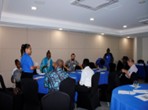
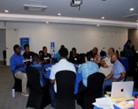
The Ocean Accounting for Maritime Transport Workshop marked a significant milestone in strengthening evidence-based maritime governance in Solomon Islands. The workshop was convened by the Solomon Islands Maritime Authority (SIMA) in partnership with the Global Ocean Accounts Partnership (GOAP) Secretariat at the University of New South Wales, with support from the Pacific Community.
Purpose
The Ocean Accounts Pilot for Maritime Transport addresses this gap by transforming dispersed data into internationally standardized, auditable accounts aligned with global statistical standards. The workshop provided a platform to present the pilot findings, validate their policy relevance, and discuss the next phase of expansion and institutional integration.
The purpose of the workshop was to present and validate the findings of the Solomon Islands Ocean Accounts Pilot for Maritime Transport, and to demonstrate how ocean accounting can support national planning, fleet modernisation, workforce development, and climate finance mobilisation.
Objectives
The specific objectives were to:
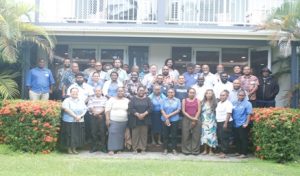
Date: Thursday 13 February 2026.
Location: Heritage Park Hotel, Honiara.
Participants highlighted the importance of elevating agriculture as a priority within maritime connectivity planning, recognising its critical link to transport and economic resilience. There was strong consensus on the need for coordinated data exchange across institutions to ensure the success of the ocean accounts initiative and to produce comprehensive, policy-relevant information.
The discussion also emphasised that investment in fleet assets and the maritime workforce must be planned as an integrated strategy, reflecting their interdependence. While stakeholders expressed willingness to share maritime data, this was conditional on appropriate safeguards. The absence of formal data-sharing agreements, legislative mandates, and governance structures was identified as a key barrier requiring urgent attention to enable safe, accountable, and mutually beneficial collaboration.
The workshop concluded with a facilitated session to reflect on the day’s discussions and findings. The session resulted in a set of formally endorsed outcomes representing the shared commitments of all stakeholders present, as outlined below.
The workshop:
Following the endorsement of the workshop outcomes, Mr. Allen Ofea, Manager Executive Office at SIMA, delivered the closing remarks. He expressed sincere appreciation to GOAP and UNSW for their technical leadership in delivering the Ocean Accounting for Maritime Transport pilot, and acknowledged SPC for its financial support encouraging continued collaboration as the initiative moves into its next phase.
The full report can be found here. More information can be obtained from Ms. Caroline Keniasina at caroline@keniasina@sima.gov.sb.
| Time | Details | Speakers |
| 1:00pm – 1:30pm | Registration | SIMA |
| 1:30pm – 1:45pm | Opening Remarks
Strategic importance of maritime data for Solomon Islands’ development and climate resilience; SIMA’s commitment to data governance. |
Mr Thierry Nervale
SIMA |
| 1:45pm – 2:00pm | Introduction to the Project and Ocean Accounts | Dr Ben Milligan
GOAP |
| 2:00pm – 2:30pm | Finalised Account Findings and Q&A | Dr Cheryl Joy Fernandez-Abila
GOAP |
| 2:30pm – 3:00pm | Dashboard Demonstration and Q&A | Dr Edoardo Santagata
GOAP |
| 3:00pm – 4:20pm | Phase 2 Expansion and Data Governance
Activity |
GOAP |
| 4:20pm – 4:30pm | 10 mins break | |
| 4:30pm – 4:45pm | Workshop Outcomes & Closing Remarks | Mr Allen Ofea
SIMA |
| 5:00pm – 7:00pm | Cocktail Reception |


SIMA – Solomon Islands Maritime Authority
PO Box 1932 – Solomon Islands
(677) 21535
contact@sima.gov.sb