Solomon Islands Maritime Authority

SIMA-UNSW Workshop on Ocean Accounting for Maritime Transport, 13 February 2026, Honiara

Purpose & Objectives

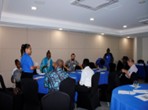
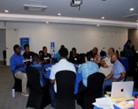
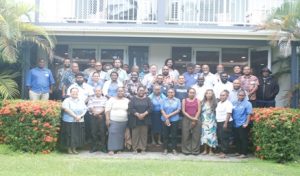
The Ocean Accounting for Maritime Transport Workshop marked a significant milestone in strengthening evidence-based maritime governance in Solomon Islands. The workshop was convened by the Solomon Islands Maritime Authority (SIMA) in partnership with the Global Ocean Accounts Partnership (GOAP) Secretariat at the University of New South Wales, with support from the Pacific Community.

Purpose

The Ocean Accounts Pilot for Maritime Transport addresses this gap by transforming dispersed data into internationally standardized, auditable accounts aligned with global statistical standards. The workshop provided a platform to present the pilot findings, validate their policy relevance, and discuss the next phase of expansion and institutional integration.

The purpose of the workshop was to present and validate the findings of the Solomon Islands Ocean Accounts Pilot for Maritime Transport, and to demonstrate how ocean accounting can support national planning, fleet modernisation, workforce development, and climate finance mobilisation.

Objectives

The specific objectives were to:
  1. Present the methodology and framework underpinning the Ocean Accounts, aligned with the System of National Accounts (SNA 2025).
  2. Share key findings from the National Shipping Asset Account, the Maritime Labour Account and the Input-Output Analysis of economic linkages.
  3. Demonstrate the Maritime Transport Dashboard as a decision-support tool.
  4. Engage stakeholders in discussions on data integration, governance, and Phase 2 expansion.
  5. Position Solomon Islands as a regional leader in maritime ocean accounting among Pacific Small Islands Developing States (SIDS).

Meeting Arrangements

Date: Thursday 13 February 2026.

Location: Heritage Park Hotel, Honiara.

Proceeding & discussion points

Opening

The Director of SIMA highlighted the strategic importance of maritime data for national development and climate resilience. He stressed the need to shift from fragmented datasets to integrated, standardised ocean accounts and reaffirmed SIMA’s commitment to stronger data governance and institutional capacity.

Ocean Accounts Framework

Dr. Ben Milligan (GOAP, UNSW) introduced the Ocean Accounts Framework and its alignment with international standards such as SNA 2025 and SEEA. He outlined the objectives of the Solomon Islands Maritime Transport Pilot and the partnership between SIMA, GOAP/UNSW, and SPC.

Shipping Asset and Workforce Accounts

Dr. Cheryl Joy Fernandez-Abila (GOAP) presented the National Shipping Asset Account, valuing the domestic fleet at USD 25.8 million against a USD 75 million replacement cost, highlighting a significant capital renewal gap. The Maritime Workforce and Skills Account estimated 1,365 seafarers with USD 24 million in annual compensation, identifying shortages of certified officers and the need for targeted upskilling.

Maritime Transport Dashboard

Dr. Edoardo Santagata (GOAP) demonstrated the Maritime Transport Dashboard as a decision-support tool to track fleet and workforce data and model investment scenarios. Participants emphasised linking it to live SIMA systems to support strategic planning and Cabinet reporting.

Questions/Answers session

Participants highlighted the importance of elevating agriculture as a priority within maritime connectivity planning, recognising its critical link to transport and economic resilience. There was strong consensus on the need for coordinated data exchange across institutions to ensure the success of the ocean accounts initiative and to produce comprehensive, policy-relevant information.

The discussion also emphasised that investment in fleet assets and the maritime workforce must be planned as an integrated strategy, reflecting their interdependence. While stakeholders expressed willingness to share maritime data, this was conditional on appropriate safeguards. The absence of formal data-sharing agreements, legislative mandates, and governance structures was identified as a key barrier requiring urgent attention to enable safe, accountable, and mutually beneficial collaboration.

Closing & Outcome

The workshop concluded with a facilitated session to reflect on the day’s discussions and findings. The session resulted in a set of formally endorsed outcomes representing the shared commitments of all stakeholders present, as outlined below.

The workshop:

  • Expressed appreciation to the Pacific Community (SPC) and the University of New South Wales (UNSW), through the Global Ocean Accounts Partnership (GOAP), for successfully implementing the Ocean Accounting for Maritime Transport pilot in Solomon Islands and establishing a credible, internationally aligned evidence base for maritime governance.
  • Endorsed Ocean Accounting as a scalable and transferable methodology capable of capturing the economic, social, and asset value dimensions of the ocean sector, and as a foundation for integrated, evidence-based decision-making.
  • Recommended upscaling the Maritime Transport pilot into a comprehensive national programme, led in collaboration with SPC and UNSW, to support large-scale development planning and investment in fleet modernisation, port infrastructure, workforce development, and climate-aligned maritime transition.
  • Encouraged other ocean-related sectors (including fisheries, tourism, and coastal development) to adopt Ocean Accounting as a governance and investment planning tool to strengthen ocean policy coherence and sustainability.
  • Called for strengthened collaboration among the Solomon Islands Maritime Authority (SIMA), Ocean12, UNSW/GOAP, SPC, relevant government agencies, provincial authorities, industry stakeholders, and development partners to expand and institutionalise Ocean Accounting under the Solomon Islands Ocean Policy framework.
  • Agreed to formally report the workshop outcomes to the Ocean12 Steering Committee to guide strategic coordination, institutional alignment, and future resource mobilisation efforts.

Following the endorsement of the workshop outcomes, Mr. Allen Ofea, Manager Executive Office at SIMA, delivered the closing remarks. He expressed sincere appreciation to GOAP and UNSW for their technical leadership in delivering the Ocean Accounting for Maritime Transport pilot, and acknowledged SPC for its financial support encouraging continued collaboration as the initiative moves into its next phase.

The full report can be found here. More information can be obtained from Ms. Caroline Keniasina at caroline@keniasina@sima.gov.sb.

Event Programme

Time Details Speakers
1:00pm – 1:30pm Registration SIMA
1:30pm – 1:45pm Opening Remarks

Strategic importance of maritime data for Solomon Islands’ development and climate resilience; SIMA’s commitment to data governance.

Mr Thierry Nervale

SIMA

1:45pm – 2:00pm Introduction to the Project and Ocean Accounts Dr Ben Milligan

GOAP

2:00pm – 2:30pm Finalised Account Findings and Q&A

Presentation on National Shipping Asset Account; Maritime Workforce & Skills Account; Policy implications

Dr Cheryl Joy Fernandez-Abila

GOAP

2:30pm – 3:00pm Dashboard Demonstration and Q&A Dr Edoardo Santagata

GOAP

3:00pm – 4:20pm Phase 2 Expansion and Data Governance

Activity

GOAP
4:20pm – 4:30pm 10 mins break
4:30pm – 4:45pm Workshop Outcomes & Closing Remarks Mr Allen Ofea

SIMA

5:00pm – 7:00pm Cocktail Reception